
About All Tours Boat ToursFrom El Calafate ToursTrekking ToursFrom Puerto Natales Tours Directions Hours & Fees
Find Tours 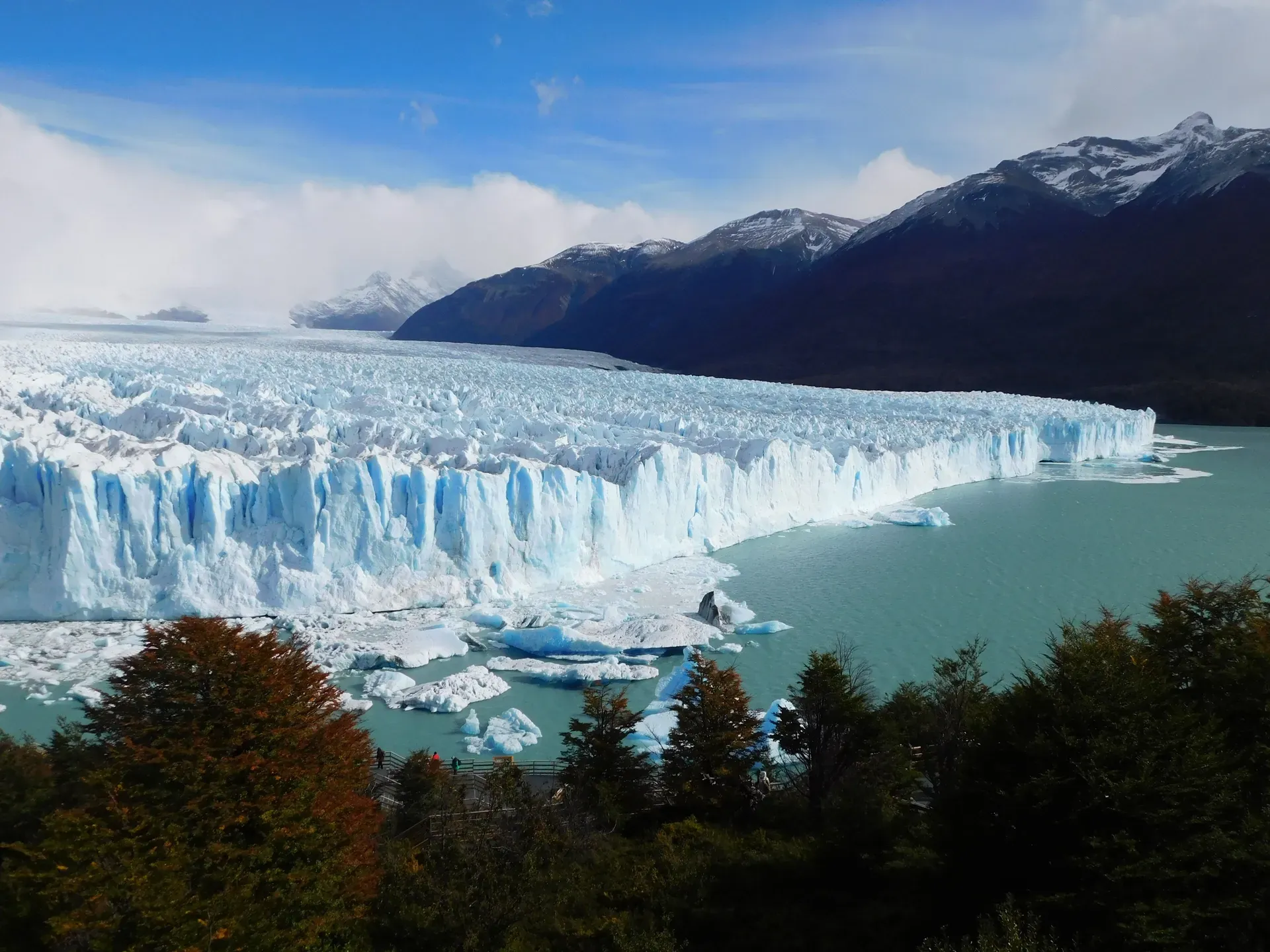
Perito Moreno Glacier spans 250 square kilometers in Los Glaciares National Park, Argentina. This 18,000-year-old ice mass actively advances, creating massive ruptures that crash into Lake Argentino daily.
Seventy-four meters of compacted blue ice tower above the freezing waters of Lake Argentino. Perito Moreno Glacier spans 250 square kilometers across southwest Santa Cruz Province, Argentina. The ice mass stretches 30 kilometers from its 2,100-meter origin in the Andes down to the 180-meter elevation of the lake. Visitors stand on four kilometers of multi-tiered steel boardwalks just across the water, watching five kilometers of jagged glacial face.
Thunderous cracks echo across the valley before anything happens. Seconds later, a house-sized block of ice detaches from the wall and crashes into the lake, sending a massive wave toward the shore. This calving process happens because the glacier constantly advances, pushing forward up to two meters per day. It remains one of the few glaciers on Earth that is not retreating.
Reaching the ice requires a 78-kilometer drive from El Calafate. The journey takes 90 minutes by rental car or public bus along Route 11. Regular highway coaches depart the main bus terminal at 8:00 AM, returning at 4:00 PM. Taxis offer a direct alternative, costing between $75 and $130 USD for a round trip with wait time included. The first view of the ice appears at Curva de los Suspiros, a roadside viewpoint located just before the main visitor area.
Winter weather between June and August brings temperatures down to -2°C and heavy snow, frequently forcing road closures. Summer months from December to March guarantee access to the walkways and daily boat excursions. A quick visit to walk the main boardwalks takes two to three hours. Adding a one-hour catamaran cruise extends the trip to a half-day.
Park gates open at 8:00 AM during the summer season, closing at 8:00 PM. Arriving right at opening allows visitors to walk the boardwalks in complete solitude and capture photographs in the soft morning light before tour buses arrive. Winter hours shift to a 9:00 AM opening and 6:00 PM closure. For the 2025-2026 season, foreign adults pay an entry fee of ARS 45,000, increasing to ARS 50,000 in June 2026. A two-day promotional pass cuts the second day's entry fee by 50 percent if used within 72 hours.
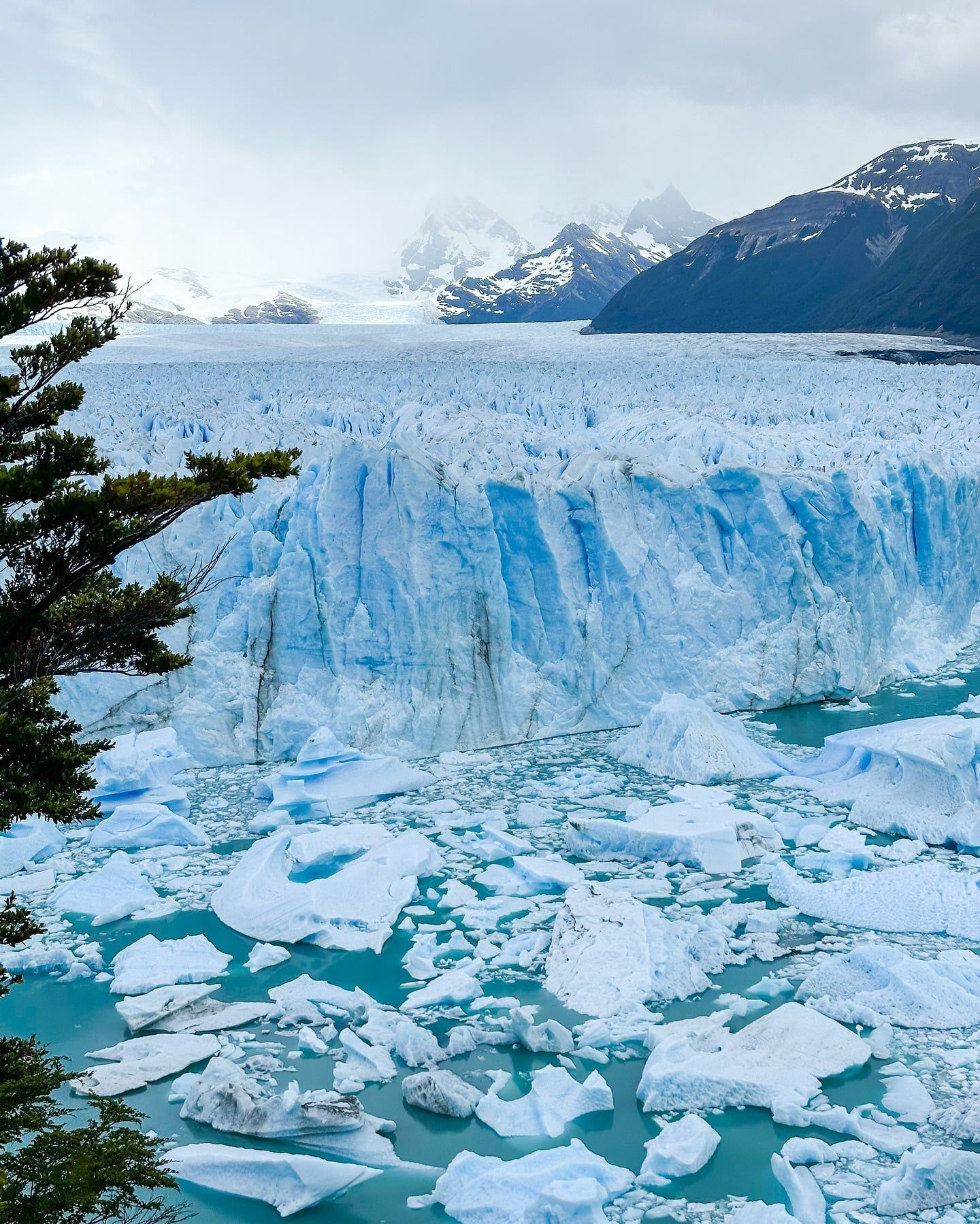
Glacial ice began forming in the Patagonian Andes roughly 18,000 years ago during the last Ice Age. The Southern Patagonian Ice Field grew to cover vast sections of the southern cone, eventually retreating to leave 48 major glaciers. Perito Moreno survived this retreat. It stabilized its position over the centuries, locking up a massive portion of the world's third-largest freshwater reserve.
Indigenous Tehuelche populations inhabited the surrounding steppes for millennia. Early human settlements concentrated near the warmer plains and natural shelters like the Walichu Caves, located 20 minutes from modern-day El Calafate. The harsh, freezing conditions on the ice field itself kept these early inhabitants away from the glacier's surface.
European explorers first sighted the ice wall in 1879. British Chilean Navy captain Juan Tomás Rogers mapped the area and named the formation "Francisco Gormaz" after the director of the Chilean Hydrographic Office. A few years later, German geologist Rudolph Hauthal surveyed the region and renamed it "Bismarck" to honor the Prussian chancellor. These competing names reflected the intense border disputes between Chile and Argentina during the late 19th century.
The 1881 Boundary Treaty between Chile and Argentina forced a definitive mapping of the southern territories. Argentine explorer and scientist Francisco "Perito" Moreno led boundary commissions to establish the exact borders along the continental divide. He defended Argentina's territorial claims through extensive surveys of the Patagonian wilderness.
Lieutenant Iglesias of the Argentine Hydrographic Institute officially named the glacier "Perito Moreno" in 1899. The designation honored Moreno's contributions to the nation's borders, though Moreno himself never actually saw the specific glacier that bears his name. The Argentine government later established Los Glaciares National Park to protect the region. UNESCO declared the entire 726,927-hectare park a World Heritage Site in 1981. Scientific monitoring continues year-round, as the glacier's anomalous stability provides critical baseline data for global climate research.
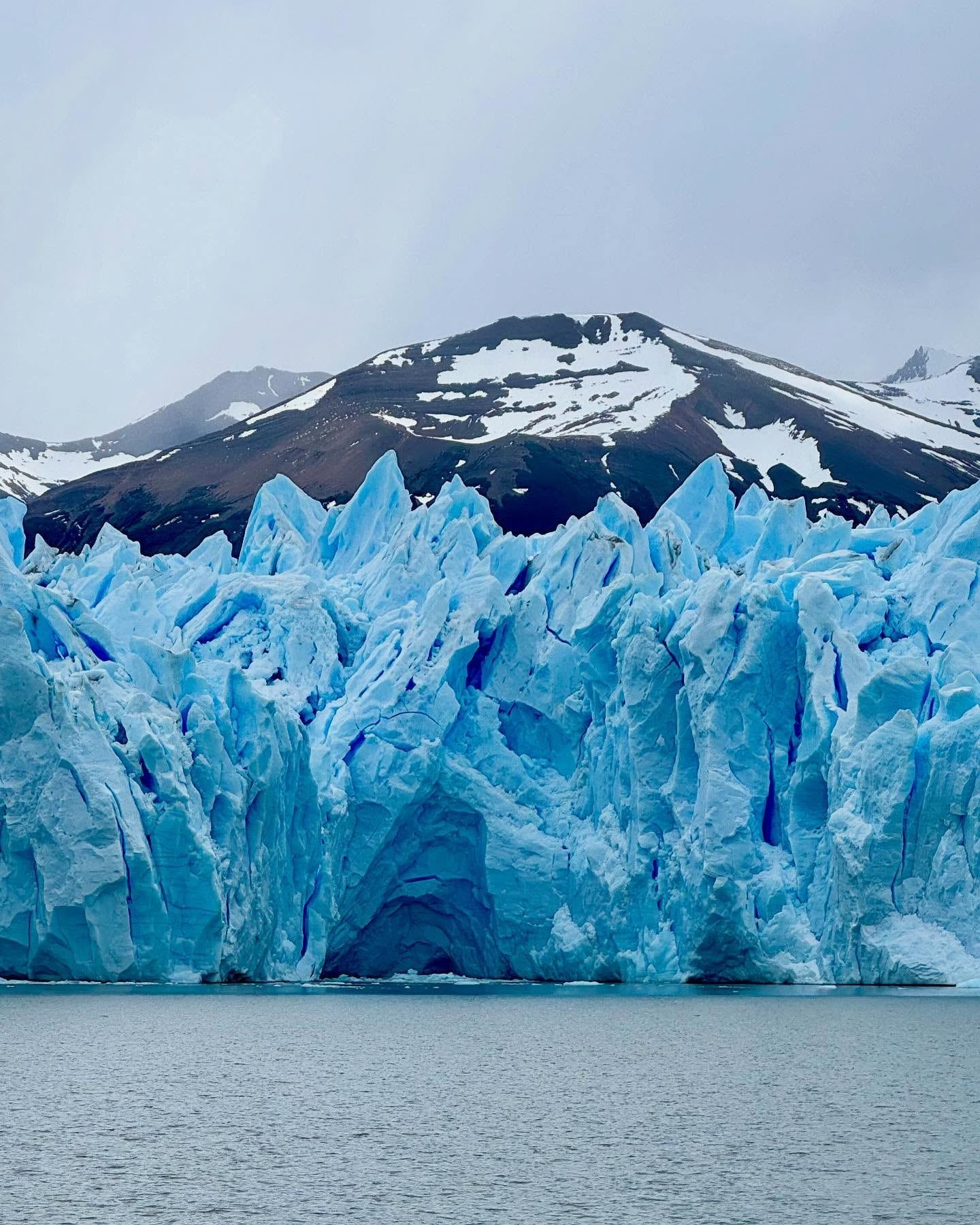
Dense, oxygen-starved ice absorbs all colors of the light spectrum except blue. This physical property gives the Perito Moreno Glacier its distinct, glowing azure hue. The ice mass holds a total depth of 170 meters, with 74 meters exposed above the surface of Lake Argentino and nearly 100 meters submerged below. The front terminus stretches five kilometers wide across the Brazo Rico channel.
Gravity pulls the ice down from its 2,100-meter origin in the Andes, forcing the massive sheet forward against the Llao Llao Peninsula. This advancement creates deep crevasses, towering seracs, and jagged peaks across the glacier's surface. When the ice reaches the opposing shore, it forms a natural physical dam. This barrier blocks the flow of water from the Rico branch into the main body of Lake Argentino.
Water levels in the dammed section can rise up to 30 meters higher than the rest of the lake. The immense pressure eventually forces water through the ice, carving a massive tunnel. The tunnel roof eventually collapses in a violent rupture event, sending thousands of tons of ice into the water. These major ruptures occur irregularly, with intervals ranging from one to four years. Standard photography captures the daily smaller calving events, with 40-150mm zoom lenses recommended for isolating ice patterns.
Visitors who prefer not to hike can board scenic catamarans that glide across Lake Argentino. These vessels approach the towering 60-meter-high ice walls, offering a front-row seat to photograph the intricate patterns of the glacier's face from the water level.
Exploring the surface requires specialized gear and strict adherence to safety protocols. The Minitrekking excursion begins with a 20-minute boat ride across Rico Lake to a crampon station, followed by 90 minutes of walking among meltwater pools. The Big Ice trek demands seven hours of total travel, including three and a half hours hiking deep into the rugged ice sheet. Adventurous travelers can also paddle double kayaks through the frigid waters, navigating around floating icebergs. Tour operators strictly enforce age limits for ice walks, capping Minitrekking at 65 years old and Big Ice at 50 years old.
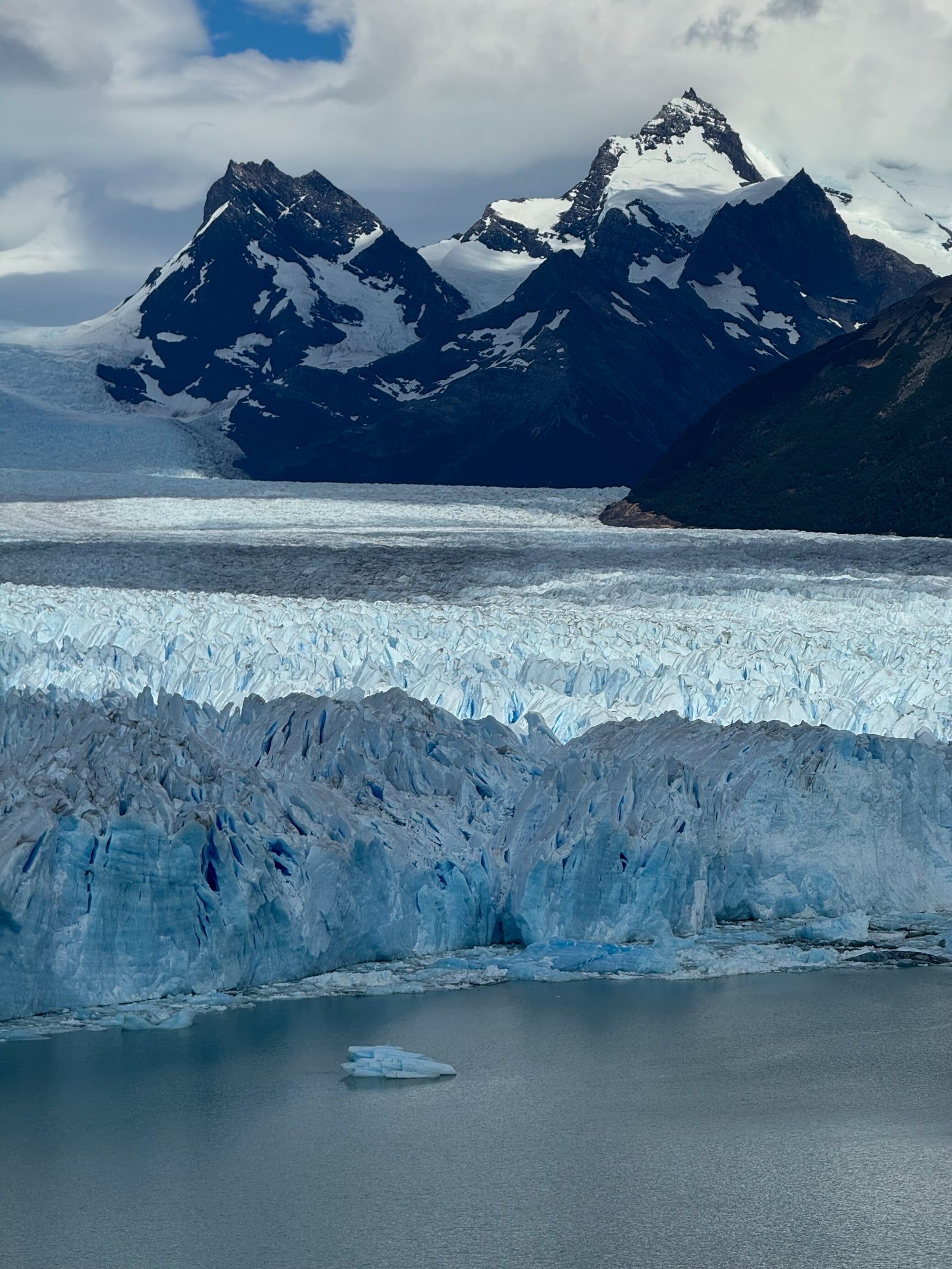
Patagonian identity revolves around the harsh, unyielding nature of the landscape. Perito Moreno Glacier anchors this regional character, drawing scientists, explorers, and climate researchers to the remote Santa Cruz Province. The glacier's anomalous behavior—advancing while most global ice retreats—makes it a focal point for international glaciology. Researchers use its stable mass balance over the last 50 years to study how specific topographical and climatic conditions protect ice from warming temperatures.
The local economy of El Calafate depends entirely on the glacier's existence. The town transformed from a minor sheep-shearing outpost into a major logistical hub strictly to service the ice field. Today, the Intendencia Parque Nacional Los Glaciares sits on the town's main street, offering historical context about Francisco Moreno and the region's early mapping efforts. The nearby Glaciarium Ice Museum provides essential scientific background on the dynamics of the Southern Patagonian Ice Field. Just north of town, the Laguna Nimez Nature Reserve protects a hundred species of birds, including Chilean flamingos. Visitors seeking a quieter experience often detour to Lago Roca, located an hour from El Calafate. This peaceful lake offers scenic hikes and birdwatching away from the heavy crowds at the main glacier viewpoints.
Modern environmental laws heavily protect the site and dictate visitor behavior. Park authorities require visitors to dress in layers—often called the "onion" method—to survive the rapid temperature shifts caused by the glacier's microclimate. Sturdy hiking boots are necessary to navigate the wet metal grating of the walkways safely. The main viewing area features a network of ramps and an elevator, allowing wheelchair users direct access to the primary observation deck.
Wild camping is strictly forbidden within the park boundaries. Domestic pets are banned from entering the national park to prevent disturbances to the native fauna. Drones are entirely prohibited to protect native bird species, and touching the glacier surface requires a licensed guide on a designated trek.
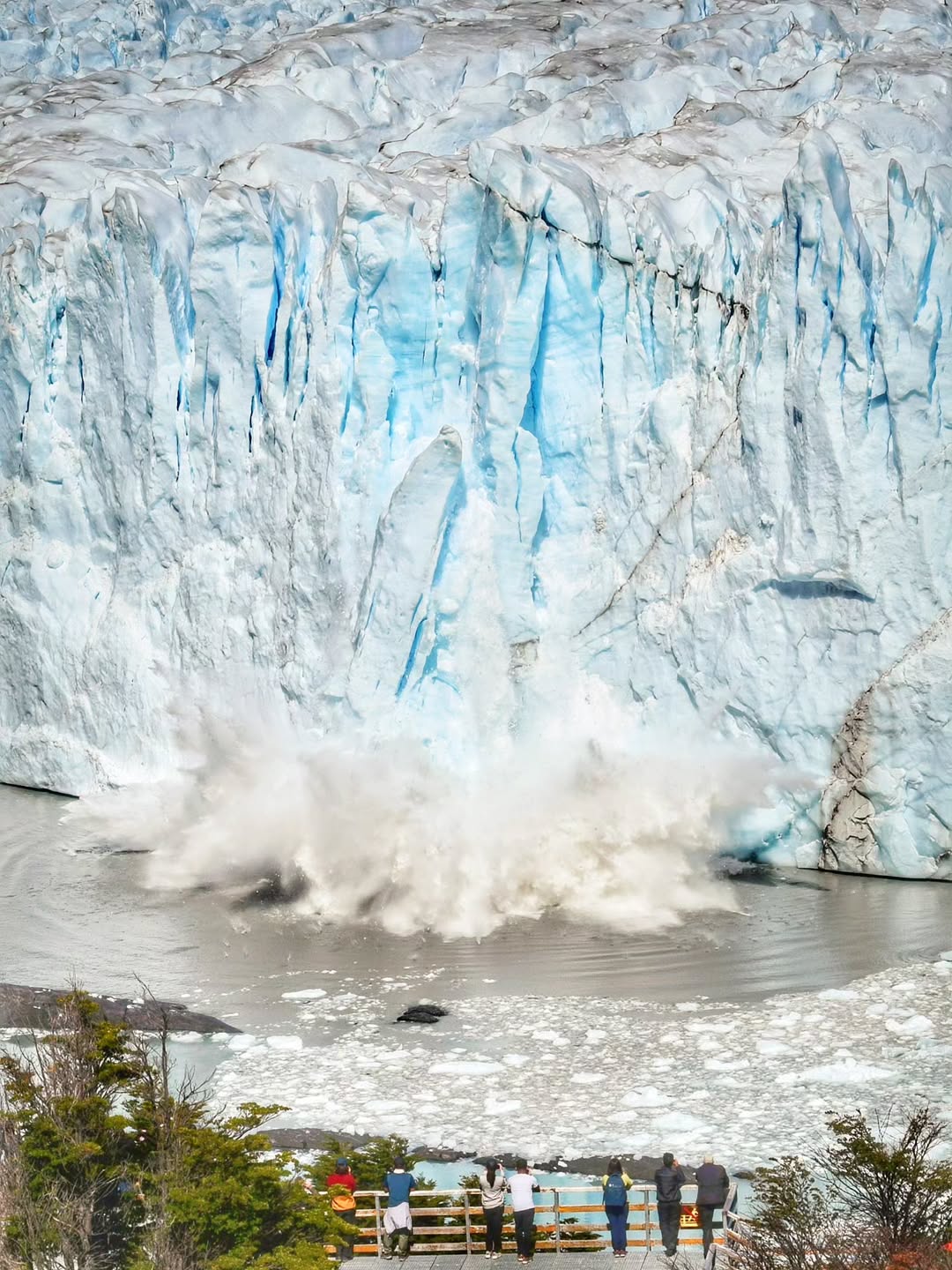
The dense compacted ice absorbs all light wavelengths except blue, creating a hypnotic glow across the glacier.
Unlike most glaciers worldwide, Perito Moreno actively advances up to two meters per day and maintains its size.
The glacier periodically reaches the opposite shore, creating a natural dam that raises water levels by up to 30 meters.
The pressure from the dammed water carves a tunnel, leading to a violent collapse of the ice bridge.
Drones are strictly prohibited throughout Los Glaciares National Park to protect native wildlife.
The total ice depth reaches 170 meters, with nearly 100 meters hidden below the lake's surface.
The massive ice sheet creates its own freezing microclimate, causing rapid temperature drops even in summer.
No, the Perito Moreno Glacier actively advances and maintains its size. It has held a state of relative stability with brief oscillations over the last 50 years. This makes it a rare exception among global glaciers.
The glacier sits 78 kilometers west of El Calafate. The drive takes 90 minutes by rental car, taxi, or public bus along Route 11.
The ice mass began forming roughly 18,000 years ago during the last Ice Age. It survives as a living remnant of the Southern Patagonian Ice Field.
Tour operators enforce strict age limits for all ice walking excursions. The Minitrekking tour accepts visitors aged 8 to 65. The more strenuous Big Ice trek restricts participation to individuals aged 18 to 50.
For the 2025-2026 season, foreign adults pay ARS 45,000. This rate increases to ARS 50,000 starting June 1, 2026. A two-day promotional pass cuts the second day's entry fee by 50 percent.
Drone use is strictly prohibited throughout Los Glaciares National Park. Park rangers enforce this rule to protect native bird species and preserve the natural environment.
The extreme density of the compacted ice alters how light interacts with it. The dense ice absorbs all wavelengths of light except blue, which bounces back to create a glowing azure hue.
The national park offers a two-day promotional pass. This ticket provides a 50 percent discount on the second consecutive day. Visitors must use the second entry within 72 hours of the first.
Domestic pets cannot enter Los Glaciares National Park. Authorities maintain this strict ban to prevent disturbances to native Patagonian wildlife and fragile ecosystems.
The front terminus of the glacier stands 60 to 74 meters above the surface of Lake Argentino. An additional 100 meters of ice remains submerged below the water.
Browse verified tours with free cancellation and instant confirmation.
Find Tours